Introduction
In modern pharmaceutical development, the quality of a drug product depends not only on the active pharmaceutical ingredient (API) but also on the control of impurities. Even tracelevel impurities can affect drug safety, stability, and regulatory acceptance. For this reason, regulatory authorities such as FDA, EMA, and ICH require detailed impurity profiling during drug development and registration. Impurity standards are reference materials used to identify, characterize, and quantify impurities in pharmaceutical substances and finished drug products.
What Are Impurity Standards?
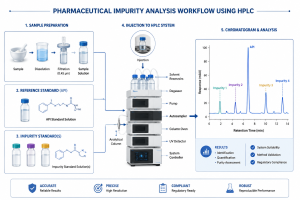
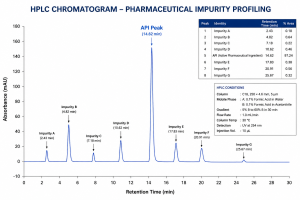
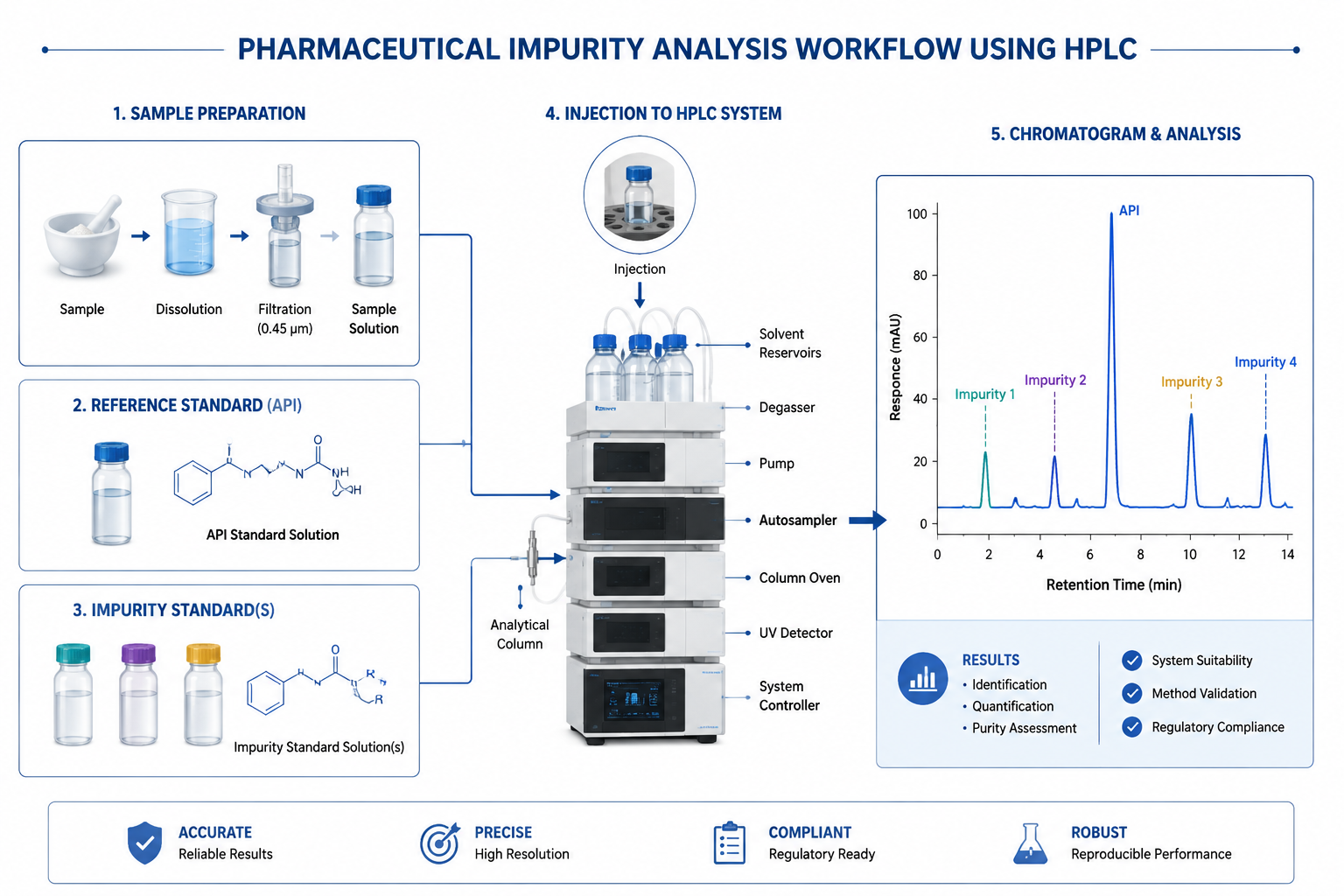
Impurity standards are chemically characterized reference compounds used to detect and quantify impurities in pharmaceutical analysis. These materials have welldefined structures, known purity levels, and validated analytical data. In analytical techniques such as HPLC, LCMS, or GC, impurity standards allow scientists to confirm the identity of chromatographic peaks and accurately determine impurity concentrations.
Sources of Impurities
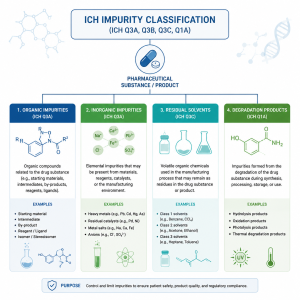
Impurities in pharmaceutical products can arise from multiple sources including synthetic processes, degradation during storage, residual starting materials, and reaction byproducts. Processrelated impurities originate during chemical synthesis, while degradation products appear during stability studies due to heat, light, oxygen, or moisture. Understanding these sources is essential for building a reliable impurity control strategy.
Role in Analytical Method Development
During method development, impurity standards help scientists optimize chromatographic separation and detection sensitivity. By injecting known impurity standards, researchers can evaluate retention time, resolution, and detector response. This enables the creation of robust analytical methods capable of separating the API from structurally related impurities.
Role in Method Validation
According to ICH Q2 guidelines, analytical methods must be validated for specificity, accuracy, precision, linearity, and detection limits. Impurity standards are essential during this validation process because they allow laboratories to evaluate how accurately the analytical method measures tracelevel impurities.
Importance in Drug Registration
When submitting a drug registration dossier, pharmaceutical companies must provide a complete impurity profile. Regulatory guidelines such as ICH Q3A and Q3B require identification and quantification of impurities above specific thresholds. Impurity standards serve as scientific evidence to confirm impurity identity and support the analytical data included in regulatory submissions.
Industrial Applications
Impurity standards are widely used in pharmaceutical quality control laboratories, research and development units, stability studies, and API manufacturing. They are also critical for batch release testing and for investigating unexpected chromatographic peaks during routine analysis.
Conclusion
Impurity standards are fundamental tools in pharmaceutical analysis and regulatory compliance. They enable accurate impurity identification, support analytical method development and validation, and provide the scientific evidence required for drug registration. Reliable access to highquality impurity standards is therefore essential for pharmaceutical companies, analytical laboratories, and research institutions working in drug development.
About Orchidgen
Orchidgen focuses on supplying specialized biotechnology and analytical materials for pharmaceutical laboratories. Through collaborations with international manufacturers such as CPC Biotech (Italy), Orchidgen helps research centers, QC laboratories, and pharmaceutical companies access highquality reference standards, impurity standards, enzymes, and analytical reagents.